

ELS In a Post ZIRP World: The Return of the Balance Sheet
February 24, 2026
For over a decade, the equity long/short (ELS) community existed in suspended animation. The post-2008 era of Zero Interest Rate Policy (ZIRP) and aggressive Quantitative Easing (QE) acted as a massive “volatility dampener” and a “valuation flattener.” When the cost of capital is zero, the difference between a high-quality compounder and a speculative “zombie” firm becomes negligible in the eyes of the market. Everything rises on a tide of liquidity, and the “short” side of the ledger becomes a persistent drag on performance.
However, as we move through 2026, the landscape has fundamentally shifted. With interest rates normalized and the “Fed Put” no longer a guaranteed backstop, the industry is asking: Is the golden age of fundamental stock picking back?
The Death of the “Liquidity Lift”
From 2010 to 2021, the dominant market force was Factor Beta. If you were long “Growth” or “Momentum,” you won. If you were short “Expensive Junk,” you were carried out on a stretcher. Low rates allowed unprofitable companies to survive indefinitely through constant refinancing, effectively killing the “short” alpha that ELS managers traditionally provided.
In a zero-rate regime, the discount rate applied to future cash flows is so low that even the most distant, theoretical earnings of a “moonshot” tech firm are worth nearly as much as the immediate cash flows of a profitable industrial giant. This compressed dispersion—the degree to which individual stocks move differently from the index—and turned the stock market into a monolithic block driven by macro headlines rather than balance sheets.
The Return of Balance-Sheet Alpha
In 2026, the cost of capital is no longer a rounding error. This “normalization” has reintroduced a brutal Darwinism to the equity markets. We are seeing the return of Balance-Sheet Alpha, where the internal plumbing of a company—its debt maturity profile, its interest coverage ratio, and its free cash flow (FCF) conversion—actually matters for its share price.1
- Valuation Discipline: Higher rates act as a gravity for multiples. Investors can no longer afford to ignore “burn rates.”
- Capital Allocation: In the ZIRP era, buybacks were often funded by cheap debt. Today, capital allocation is a high-stakes game. Companies that can self-fund growth are pulling away from those reliant on capital markets.
- The “Short” Opportunity: For the first time in fifteen years, the “Short” side of ELS is generating real returns. “Zombie” companies—those whose interest expenses exceed their EBIT—are finally hitting the wall as they attempt to roll over debt at 6% or 7%.
Dispersion: The Stock Picker’s Oxygen
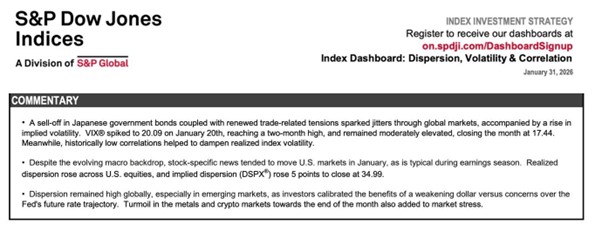
Stock pickers thrive on dispersion.2 When the market moves as one, active management is a fool’s errand. But today, the “S” in ELS is back. Higher rates have decoupled stock performance. Within the same sector, we now see massive performance gaps between winners and losers based on idiosyncratic factors rather than broad sector trends.
Fundamental managers are exploiting this by moving away from “Factor-driven” bets (which are prone to sudden, violent reversals) and focusing on Idiosyncratic Risk. This involves deep-dive research into supply chain advantages, IP moats, and management quality. In 2026, the “macro” is the backdrop, but the “micro” is the driver. The higher the dispersion, the higher the outperformance potential of the active manager.3
A key issue that fund managers will be watching in 2026 is the adoption of AI in enterprises worldwide.4 As the scale of investments in AI is rising exponentially, two critical issues are coming to the fore:
- Will the AI companies be able to realise the revenues they forecast for the next 10 years? This is important because a significant portion of the investment is debt, and any hiccups in revenue will affect the repayment cycle.
- What is the level of adoption of AI in real use cases in the enterprise at a global level? Unless and until the adoption scales, there will be challenges in linking AI investment to the bottom line.
Recent turbulence in the stock markets is an example of how disruptive AI can be. At the same time, enterprise adoption has been patchy.
As a result, notwithstanding macro indicators, the Mag 7 stocks will be seen as a bellwether for the equity markets into 2026. At the same time, there will be opportunities to observe the micro indicators of the said AI cycle and identify outliers, which, in a few cases, may lie outside Mag 7.
Source: S&P Global5
Factor Decay and the Rise of “Smart” Active
One of the most significant shifts is the decay of traditional factors. For years, quantitative factors such as “Value” or “Small Cap” have provided reliable premiums. However, as these factors became “crowded” by multi-manager pods and massive algorithmic flows, their alpha was competed away.
Today’s successful ELS managers are using Agentic AI and alternative data—ranging from real-time satellite imagery of shipping hubs to sentiment analysis of employee Glassdoor reviews—to find an information edge that traditional factors can no longer capture. This isn’t just “quantamental” investing; it’s fundamental research at a higher resolution.
The Multi-Manager “Pod” Pressure
Despite the favorable environment, ELS managers face a new adversary: the Multi-Strategy “Pod” shops. These firms trade with extreme leverage and tight stop-losses, often causing “de-grossing” events in which stocks are sold not because the fundamental story has changed, but because a risk limit is hit.
Fundamental managers must now navigate this “technical” volatility. Success in 2026 requires more than just knowing a company’s 10-K; it requires understanding the market structure—who owns the stock, how much leverage is behind the position, and where the “pain points” are for the systematic players.
The New Long/Short Paradigm
The era of passive, index-hugging growth is over. The “normalized” cost-of-capital regime has restored the value of the short seller and the discipline of the fundamental analyst. For the first time in a generation, the market is rewarding those who can distinguish between sustainable cash flow and cheap-money-fueled hype.
Equity Long/Short is no longer a defensive play or a “hedge” against a crash; it is the most effective way to capture the widening gap between the resilient and the reckless. Fundamental stock picking isn’t just working again—it’s becoming essential.
Sources:
1. https://www.blackrock.com/us/financial-professionals/insights/equity-investors-guide-2026
3. https://www.msci.com/research-and-insights/quick-take/dispersion-in-equity-markets